Who is Promoting Mono Anyway?
- Dr. Roy Schestowitz
- 2008-08-23 01:18:27 UTC
- Modified: 2008-08-23 01:23:22 UTC
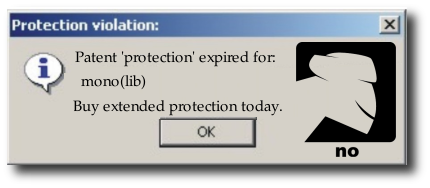
IBM's Bob Sutor does not like Mono. This was covered before [1, 2, 3]. Despite the fact that he rejects Mono, IBM's stance is a tad different. IBM, for reasons that we mentioned before, still accepts Novell and accepts what it did with Microsoft. In fact, Linden Labs now embraces some of Novell's Mono.
Linden Labs is installing the Mono Project's virtual machine on its heavily trafficked Second Life servers - Sadville runs more than 2,500 clustered servers.
I've inquired
here and received some responses. One comes from Chris Ward, who belongs to IBM. What to make of it all? It's uncertain.
Yesterday we mentioned a
Mono 'guard' in Ubuntu Forums. There was a long discussion about it in the IRC channel today (logs will go live tomorrow). It seems very mysterious and it also may be possible that Novell employees are promoting and protecting Mono under anonymous account in Ubuntu Forums. Maybe they are just part of the Mono developers community. We have no proof yet, but either way, it looks rather bad.
There's reason to be cautious but not yet concerned. Watch what someone says in this
brand-new review of gOS 3.
Now even though Adobe AIR and Mono version of Microsoft Silverlight is still in Beta stage and are very buggy, still gOS team might consider including them in future release...
Keep the software clean from Mono. The reasons were explained before [
1,
2].
⬆
“At Microsoft I learned the truth about ActiveX and COM and I got very interested in it inmediately [sic].”
--Miguel de Icaza
