
EditorsAbout the SiteComes vs. MicrosoftUsing This Web SiteSite ArchivesCredibility IndexOOXMLOpenDocumentPatentsNovellNews DigestSite NewsRSS

10.23.08

Eye on Microsoft: A Black Screen of Death Ahead of Microsoft’s Results

Posted in Apple, Asia, Bill Gates, GNU/Linux, Google, Law, Microsoft, Videos, Vista, Windows at 8:02 am by Dr. Roy Schestowitz

Black eye coming Thursday?

This post is an accumulation of Microsoft news since the beginning of the week. There is quite a large load of stuff and overall it’s pretty gloomy. Microsoft’s financial results will come out later today, so we’ll start with more urgent topics that need to get out of the way. On Saturday we shall write more extensively about Microsoft’s latest results, which it will definitely try hard to embellish (further digging is always required).

Microsoft’s Failing Web Division, Debt Woes

The Register has a piece on Microsoft’s failure to evolve ahead of a Web era. It also discusses the financial situation (remember that Microsoft is approaching debt).

Such is the commitment to drive traffic to its own versions of Google search, YouTube, and Digg, Microsoft has done what most other startups couldn’t: spend billions of dollars and almost double it’s workforce in just three years. Microsoft now has nearly 100,000 employees.

Despite its size, though, Microsoft is poised to experience the same pains of junior startups, if the money that fed Web 2.0 optimism has – as it seems – dried up. If and when that happens, and if Microsoft’s business managers behave like most do during a downturn, that’ll hurt Microsoft’s three-year-old Web 2.0 strategy.

Don’t bank on the bank

The economy, as you’re well aware by now, is in trouble. Banks are not lending money, and some big names have gone out of business.

[...]

This is just one case, but it’s symbolic. What if other customers also start struggling to pay the bills when their cash flow begins to dry up?

What about those loans Microsoft is prepared to take? We recently wrote about services and products that Microsoft was killing, including some MSN-branded ones (i.e. online business). In addition to this, mini-Microsoft (outspoken yet anonymous Microsoft employee) believes that layoffs are not out of the question.

It is too soon to expect this during this week’s quarterly results, but within the next quarter, as the impact to reduced global PC sales becomes apparent, we should be ready to announce some major overhead reduction (e.g., not towels but rather less butts for said towels to dry – win-win). And remember: you cut once and you cut deep. Incremental pain is unhealthy and all that you’re doing is poisoning your teams and setting up a huge round of bad attrition once things turn around.

Microsoft’s stock (MSFT) collapsed in yesterday’s trading after the company had issued an outlook warning. Reuters reports:

Microsoft’s shares have plunged to an eight-year low and its rivals such as SAP AG have warned of tighter demand.

Some might argue that Microsoft has huge cash piles and therefore it can buy its own stock (which it already does very aggressively). Well, according to this article from Fortune, it is a failing strategy. It’s merely an illusion.

Last month, Microsoft announced it was going to spend $40 billion buying back its own stock. Traditionally, that would have meant a payday for its investors. With Microsoft using its own spare cash to reduce the number of outstanding shares, earnings per share should have improved, and the stock price should have ticked upwards.

At risk of sounding like a parrot, Microsoft’s results will arrive later today. It’s worth reminding ourselves that Microsoft disappointed its investors when it unleashed the past two reports (April and July), so the stock sank. Even Microsoft’s profits declined, at least in April. Windows was down 24%.

Steve Ballmer and Other Failures

Microsoft Watch, despite being somewhat of a Microsoft shrine, is disappointed with Microsoft’s latest advertising campaign.

News Commentary. For weeks, I’ve watched Microsoft’s “I’m a PC” commercials. As a marketing campaign, my verdict: Fail.

Apple has just released another new commercial which hits Microsoft right where it hurts. This arguably helps GNU/Linux because of the negativism, as opposed to Apple advocacy. We embed it below (no Ogg, and we deeply apologise for that).

I posted some more in my personal blog, for those who may be interested.

There was a lot of talk in the blogosphere about Steve Ballmer’s tactless remarks regarding Windows Vista. Here is one example:

As though this weren’t enough, he kept right on talking. In a column on ComputerWorld called Ballmer Says Skip Vista, my colleague, Steven J Vaughan-Nichols reports that Ballmer told the same audience if they wanted to wait for Windows 7, they certainly can. Come again?! That’s right, it’s a statement so outrageous coming out of the mouth of the Microsoft CEO, that it’s hard to believe he said it. I’m sure his PR people were just thrilled to hear that, as was the Vista sales team. As Vaughan-Nichols says, this is a prime opportunity for Apple and Linux to continue to capture market share while waiting for the elusive Windows 7.

Giving Apple and Linux a Huge Opening

Given that many people are just looking for an excuse to jump ship from Microsoft, you might think that the CEO would be doing damage control for the OS his beleaguered company is trying to sell today, but instead he’s saying it’s OK to move on and wait for the next one. This is just bone-headed coming from your chief executive, the individual whose job is to promote your company’s public image, yet there he was sticking his foot in hit once again.

More in IDG:

Microsoft has had some trouble explaining these alleged contradictions; with, for example, Nash calling Windows 7 both a “significant” and “evolutionary” advancement. Then Microsoft CEO Steve Ballmer declared at Gartner’s annual Symposium ITxpo in Orlando, Fla., that, “Windows 7 is Windows Vista with cleanup in user interface [and] improvements in performance.”

From now on, it would be useful and constructive to refer to “7″ as “Vista 7″. This ought to remind people what the ‘new’ operating system really is. There is a lot to a name.

The following comment from Steve Ballmer is even worse than the predecessors:

Ballmer: Microsoft Unlikely To Top Vista’s ‘Success’

[...]

Said Ballmer, at an industry confab in Brazil last week: “We’re not going to have products that are much more successful than Vista has been.”

Say what? Hang on a sec, would you please, Dear Reader.

Thanks — I’m back. I just had to go dump a few thousand Microsoft shares. [Disclosure: I don't really own Microsoft shares, but if I did ...]

It was only days ago that Jun Auza brought to readers’ attention some memorable Steve Ballmer quotes. Here are just a few:

11. “DRM is the future.”

10. “Our mail product, Hotmail, is the market leader globally.”

9. “I don’t know what a monopoly is until somebody tells me.”

8. “We’ve had DRM in Windows for years. The most common format of music on an iPod is “stolen”.”

For whatever reason, I find the following video particularly amusing.

We’ve had some disagreements with Chris Pirillo in the past, but these were eventually resolved.

BoingBoing has this sarcastic post about Vista 7 [sic] and its 20 to-be editions.

Earlier today, Microsoft confirmed that its next operating system, codenamed Windows 7, would in fact be called just that when it hits shelves at some point in the next few years. Good on ‘em, I say: a simple, no-nonsense name suggests they’re approaching it with a clearer eye than they had cooking up the hypefest that was Vista.

It must be remembered that Vista 7 is vapourware. It won’t be seen any time soon. In fact, more delays and false promises are affecting and directed at XBox users too. Consider the following new reports:

  1. Microsoft delaying Xbox Live Primetime
  2. Microsoft Xbox: Not Ready For Primetime
  3. Microsoft cancels Fallout 3 in India

Not to worry. Everything is under control.

Muhammed Saeed al Sahaf

Zombie Nation

We already wrote about how 40% of the computers out there are zombies. It’s an embarrassing — and some would say “scary” — figure. Well, even the New York Times, despite being tied to Microsoft's pocket, is beginning to address and disclosure this issue out in public, potentially inciting (un)necessary panic in the process.

In a windowless room on Microsoft’s campus here, T. J. Campana, a cybercrime investigator, connects an unprotected computer running an early version of Windows XP to the Internet. In about 30 seconds the computer is “owned.”

Criminals are believed to have amassed around 320,000,000 zombie PCs, based on the figures from USA Today. This botnet plague is a very serious issue because it may have already led to multi-national cyber-wars. From the latest news:

The hackers who launched cyberattacks against the former Soviet republic of Georgia two months ago probably had links to the Russian government, even though no hard evidence has been uncovered of official involvement, a report by an all-volunteer group of experts said Friday.

Last night, presidential candidates were publicly seen being approached by the Special Services due to concern about zombies and other cyber-threats. (source: IDG)

There are many other security-related reports, including:

1. McAfee update classifies Vista component as a Trojan

McAfee has fixed an update glitch that wrongly slapped a Trojan classification on components of Microsoft Vista.

2. Facebook Malware Targets Windows PCs

Fake pages on social networking site Facebook which claim to offer free videos will infect Windows PCs with malware, warns F-Secure.

3. Anti-virus dominates PC application sales chart

According to research group NPD, this month’s list of top 10 PC software applications contains 3 video games, 1 productivity tool and 6 anti-virus/security tools. It’s amazing that Microsoft has created more of a market for applications that fix the problems Windows causes than it has for entertainment or business.

4. Microsoft, Oracle get busy plugging security holes

Microsoft Corp. and Oracle Corp. each dropped a bevy of software patches on their users last Tuesday, with Microsoft issuing 11 updates to plug a total of 20 security holes and Oracle releasing 36 separate fixes.

Those who do not use Microsoft Windows are probably thankful, but we all share the costs and the burden caused by cyber-turbulence. Punishment is in many ways a collective one.

Don’t ever fall for Microsoft’s lies regarding security [1, 2], even when these lies are echoed by its close allies. It’s a bald-faced misinformation campaign.

National Propaganda Day

Well, Microsoft has decided — all out of the blue in fact — that the world needs to have “Global Anti-Piracy Day”. Apart from the appalling use of the word “piracy” — something that Microsoft strongly (but secretly) encourages for spreading of its products — there is a hidden agenda here. We’ll come to this in a moment.

Here is the Linux-allergic Alex writing about what this day possibly means to GNU/Linux users.

Microsoft’s new “Global Anti-Piracy Day” must have Linux users laughing

It was only last week on the 14th of October that Microsoft Australia took some pirates to court, filing proceedings “in the Federal Magistrates Court for copyright infringement against three individuals trading online.”

Microsoft’s special day of whining happens to have unintentionally revealed some unflattering figures. Ouch.

Pirates prefer Windows XP over Vista, says Microsoft

Software counterfeiters pass on Windows Vista and instead prefer to pirate Windows XP, a Microsoft Corp. attorney said today, outlining a practice that tracks with the leanings of many of the company’s customers.

While explaining the “Global Anti-Piracy Day” educational and enforcement effort Microsoft launched today, Bonnie MacNaughton, a senior attorney with the company, acknowledged that pirates prefer Windows XP over Vista.

Tectonic is ahead of the curve. It’s able to see what it’s all about.

Today is Microsoft’s self-declared Global Anti-Piracy Day. No surprise then that the local arm of the Business Software Alliance has been ringing up journalists over the past couple of days with the ominous news that South Africa is losing between R2.8 billion to software pirates every year.

As usual, the BSA statements are sweeping and presumptive.

For a start, South Africa doesn’t really lose all this money. Most of the licensing money heads straight overseas to companies like Microsoft and Adobe with this country holding on to very little of it.

The BSA ’software police’ is another disturbing subject that was covered before, but worth noticing (if you look closely at press) is Microsoft’s attempt to have journalists cover this extensively and have some sort of massive effect.

At the end of day, it is just one more opportunity to throw around bogus reports with inflated figures (the loss and ‘harms’ to society) and produce explanations for Microsoft’s financial results, which will come later today. When Microsoft performs well, then it says it’s “despite the piracy”; when expectations are not met, Microsoft blames “the pirates”. Prepare for more of that, although this time around the global economic slump can be blamed too. But it’s never Microsoft’s fault; its products reign supreme! [sarcasm /]

Microsoft Sued for Sabotaging PCs

Microsoft must be in real need for revenue — and urgently. It starts showing users who is in charge of their PCs.

A lot later than observant people had discovered this, InformationWeek’s Microsoft blog noted that Microsoft controls Windows PCs remotely and there is no way to disable this behaviour. Microsoft gives GUI controls for a false sense of control; it just ignores and overrides these user settings though.

I was out of the office most of last week, traveling on business. My system has quite a few automated tasks that run, so I tend to leave it running even when I’m away. I returned to the office to find the system had rebooted, with a message that Windows Update had applied patches. There’s just one problem: I don’t use that option.

People in China have just found out that their modified Windows installations (again, no way to prevent this) are acting up. Having got the Chinese people “kind of addicted,” just as Bill Gates had planned, Microsoft is now starting to exploit the lock-in and squeeze users for money they don’t have. It comes amid a global recession.

Microsoft accused of hacking in piracy clampdown

Across China thousands of computer screens are turning dark. The reason is a piece of software from a US firm.

Software giant Microsoft is deactivating unauthorised copies of its Windows operating system, in a nation where 82% of all software is pirated – even if many end users do not know it.

Microsoft is playing a very dangerous game here (also in places like Malaysia). This could drive a lot of users to GNU/Linux. Remember the story about The Goose That Laid the Golden Eggs. Microsoft is squeezing the goose now.

Here is some more information from The Inquirer:

China’s vocal bloggers seemed stunned that their computers seemed to have phoned Microsoft for the anti-piracy tool without asking.

“The computer is mine”, one angry blogger penned, “Microsoft has no right to control my hardware without my agreement”, the poor fool thought.

Well, guess what? Microsoft got sued for it.

A Chinese lawyer has filed a legal complaint against Microsoft for installing Windows Genuine Advantage on his computer. He has asked the Ministry of Public Security to file criminal charges against Microsoft.
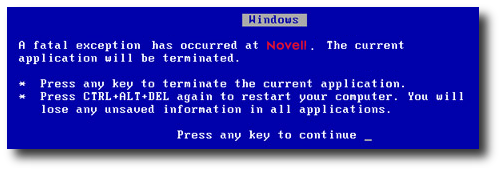
BSoD for Novell

Microsoft is Suing Everybody

Microsoft is not only being sued. it seems to have begun suing the entire world, as well. Here are some of the reports which surface at the moment:

1. Microsoft sues Rochester firm for piracy

As part of a global antipiracy push, software giant Microsoft is taking aim at a Rochester business — Miracle Computer LLC.

In a lawsuit filed in U.S. District Court in Minneapolis Monday, the maker of the Windows operating system accuses Miracle of a practice called hard-disk loading, meaning selling computers with unlicensed versions of Microsoft software.

2. Microsoft sues two Portland companies

Microsoft has filed suit against two Portland companies that it accuses of software piracy.

The suits, filed Monday in U.S. District Court in Portland, allege that Portland-based Grand Avenue Microtech and Gresham-based Agility Corporate Solutions “have infringed Microsoft’s copyrights and trademarks.”

3. Microsoft suit targets 2 area stores

Microsoft has accused two central Ohio companies of software piracy as part of a sweep this week that includes accusations against 18 other software resellers in nine states.

What a nice and gentle company.

Political Manipulation

In recent weeks we have been writing about Microsoft muscling the United States government in order to harm Google. There are some really nasty tactics involved [1, 2]. The press has some more coverage that sheds light on these tactics, which as we showed before, include AstroTurfing. Here are some reports:

1. Microsoft and Google face off in Washington

Microsoft and Google face off in Washington

[...]

Rudy Arredondo, the chief executive of the Latino farmers group, confirmed that his organization became involved in the issue after talking to lobbyists at the Raben Group. The Raben Group received $30,000 this spring to lobby against the deal – from Google’s rival, Microsoft, which wanted to buy Yahoo.

2. Microsoft’s Role In GOOG-YHOO Delay: Outlobbying

Meanwhile, Microsoft spent the intervening months lobbying everyone—regulators, other lobbyists, anyone who might be willing to raise a doubt about the anti-competitive possibilities. In the process, they drew some support—or at least, some doubt-raising—from some of those who gave the Redmond company grief over anti-trust issues.

[...]

Google both blames Microsoft for working “hard from behind the scenes to generate much of the opposition to this deal” and tries to dismiss it. And Microsoft doesn’t want credit for this one, with a spokesman telling the Times: “There’s an old rule in debate: if you’re not winning on substance, talk about the process.”

3. Microsoft uses D.C. muscle to squash Google-Yahoo deal

4. Is Microsoft showing Google the legislative ropes?

When the country is run by 'legalised bribery', is there any hope for a democracy left?

“Did you know that there are more than 34,750 registered lobbyists in Washington, D.C., for just 435 representatives and 100 senators? That’s 64 lobbyists for each congressperson.”

CIO.com

Share and Enjoy: These icons link to social bookmarking sites where readers can share and discover new web pages.
  • Digg
  • del.icio.us
  • StumbleUpon
  • Reddit
  • co.mments
  • DZone
  • email
  • Google Bookmarks
  • LinkedIn
  • NewsVine
  • Print
  • Propeller
  • Slashdot
  • Technorati
  • TwitThis
  • Webnews
  • YahooMyWeb

If you liked this post, consider subscribing to the RSS feed or join us now at the IRC channel. To use your own IRC client, join channel #boycottnovell in FreeNode.

Pages that cross-reference this one

A Single Comment

  1. Technie said,

    October 23, 2008 at 12:41 pm

    Gravatar

    It could be that MS is buying its own shares when they are really low and then sell it off when the market has recovered.

    Cant say exactly the stock market games people play !

What Else is New


  1. Government Cronyism Watch: Microsoft Inside FCC, California, Washington, and Bahrain

    Latest examples of Microsoft entering the non-commercial arena and influencing decisions so as to help its bottom line


  2. The Brute Force and Sheer Power of Microsoft Windows

    How Windows botnets enable criminals to make a lot of money at the expense of Windows users


  3. IRC: #boycottnovell @ FreeNode: March 21st, 2010

    IRC Log for March 21st, 2010


  4. Xbox 360 Dies Without a “Coffin” and Microsoft's Other Hardware Endeavours Seemingly a Dead End

    Microsoft's attempts to sell hardware products such as consoles, portable media players, and phones seem destined to burial


  5. Jerry Seinfeld Makes “Lousy Celebrity Endorsement” for Microsoft After Reportedly Dumping Windows

    Key Vista endorser Jerry Seinfeld is named as one of IDG's top 10 "Lousy Celebrity Endorsements"; Compatibility problems in Vista 7 stressed again to rebut Microsoft's latest spin


  6. Microsoft Vice President Quits in China, Others Do Too

    The Great Microsoft Exodus carries on, particularly in a division that loses obscene amounts of money


  7. SCO Cash Infusion Came from Former SCO Staff

    A new disclosure of names of those who fund SCO's lawsuit against Linux reveals many former members of SCO


  8. Are Proprietary Software Users Too Dangerous for Copying and Pasting?

    The primitivism of Apple's and Microsoft's tablets or phones (respectively) as shown using some new information


  9. Given Choice, Customers Reject Microsoft

    Customers who buy new PCs choose Web browsers other than Internet Explorer, so a similar approach should be taken and applied to operating systems


  10. Eye on Security: Windows Botnets and Other New Problems

    Assemblage of security news from recent days


  11. The Vanishing of Microsoft's Misconduct (Bribes)

    Resurrection of a dead article about Microsoft corrupting academia


  12. Links 21/3/2010: LXDE in Google Summer of Code, CrunchBang Moves to Debian

    Links for the day


  13. IRC: #boycottnovell @ FreeNode: March 20th, 2010

    IRC Log for March 20th, 2010


  14. Señor de Icaza Meets Other Microsoft MVPs

    José, Miguel, and other boosters of Microsoft Corporation have a get-together at the company's annual event


  15. SCO Roundup: SCO Group Receives a $2 Million Cash Infusion

    News from the SCO case, including a few major developments


  16. Novell Staff Shrank by ~10% and Hovsepian Allegedly Plays Hard to Get With Elliott Associates

    It's rutting season for Novell's Ron Hovsepian and Elliott Associates' Singer as the company keeps diminishing but wants to be valued more generously


  17. Novell News Summary - Part III: Clarifications from Elliott Associates, Hosted Conferencing, and BrainShare 20TEN

    Elliott Associates still insists that Novell will stay in tact; Utah prepares for the annual Novell pilgrimage


  18. Novell News Summary - Part II: IBM, Novell, SUSE Appliances, and Ingres

    News about SLES, especially as an appliance but also as a server that IBM commonly uses


  19. Novell News Summary - Part I: FLISOL 2010, Linux Tage 2010, and OpenSUSE 11.3 Milestone 3

    Another restful week for "Geeko" and some news from events that featured OpenSUSE


  20. Patents Roundup: Android/Linux Defended by HTC; Monsanto and Ghana

    News about patents where the system has gone awry (the Apple-HTC case and GMO in Africa)


  21. Microsoft and Its Front Group, Association for Competitive Technology (ACT), Organise Software Patents Lobby Events in Europe

    The Microsoft PR effort to marginalise or illegalise Free software overseas carries on quietly (using proxies, as usual)


  22. Microsoft MVP de Icaza: Microsoft “Shot the .NET Ecosystem in the Foot” Because of Patent Threats

    Despite awakening and realisation of the obvious, Novell carries on promoting and spreading .NET, knowing damn well the consequences for others


  23. Links 19/3/2010: Google’s TV Project, OpenOffice.org Turning 10, OSBC

    Links for the day


  24. IRC: #boycottnovell @ FreeNode: March 19th, 2010

    IRC Log for March 19th, 2010


  25. Novell Hires More Mono People (Despite Sacking SUSE Developers) and Microsoft Buys an OSBC Spot/Seat

    Novell and Microsoft continue to fund development with the desired bias of using Microsoft APIs; Microsoft pays for its share of OSBC (again) and gets to set the tone with a keynote speech


  26. Patents Roundup: Europe, ACTA, Aldi Attacked by the MPEG Cartel, and More

    Europe's policy on software patents and the ACTA factor; the MPEG patent pool turns out to be not much of a sleeping giant but an awake one; patents relating to cancer genes continue to needlessly cost lives


  27. Linux is Not Against Software Patents (and Why Linus Torvalds Should Speak Up)

    An inconvenient truth about the Linux Foundation is brought up again now that Linux is attacked with software patents that are named


  28. Microsoft Sued by VirnetX (Again) and Kodak Alleges That Microsoft's Patent Troll Bullies Companies Along With Ray Niro

    Intellectual Ventures is said to be attacking companies using its proxies and Microsoft suffers the wrath of the very practice it advocated with investments (patent trolling)


  29. Democracy is Not the Same as Freedom

    People have lost track of real mistakes that Canonical is making and instead they focus on buttons and themes


  30. Amazon and Dell: Friends or Foes of GNU/Linux?

    What Amazon does not want to tell us about software patents in its recent deal with Microsoft; more reasons to suspect that Dell pays Microsoft for Ubuntu GNU/Linux


RSS 64x64RSS Feed: subscribe to the RSS feed for regular updates

Home iconSite Wiki: You can improve this site by helping the extension of the site's content

Chat iconIRC Channel: Come and chat with us in real time

Recent Posts