
EditorsAbout the SiteComes vs. MicrosoftUsing This Web SiteSite ArchivesCredibility IndexOOXMLOpenDocumentPatentsNovellNews DigestSite NewsRSS
Boycott Novell

11.05.08

Ideas Are Not a Property, Devices May Be

Posted in Intellectual Property, Law, Patents at 9:00 am by Roy Schestowitz

“IP is often compared to physical property rights but knowledge is fundamentally different.”

Professor Joseph Stiglitz

ONE of the best writers on the issue of intellectual monopolies, among others like Mike Masnick, is Glyn Moody. He has no mercy when he sees an unjust system and yesterday he published this post in IDG about patents and the notion of “property”.

As long-suffering readers of this blog will have noticed, one of my favourite hobby-horses is that the whole idea of “intellectual property” is a trick, designed to plug into the warm and fuzzy feeling most people have about the idea of property, and aiming to cover up the fact that what we are really dealing with here are intellectual monopolies – of which few people are fans.

Also from Glyn, a prelude to another financial collapse caused by paper-thin monopolies? It seems possible. As pointed out in the comments, however, not patents are involved, but something a little more reasonable in this case.

The fact remains that the system was corrupted to the point where simple abstract ideas can be considered ownership, but this era appears to be ending, eliminating along with it billions of dollars in imaginary assets.

Your Business Method Patent Has Just Been Invalidated

[...]

This ruling raises a ton of questions like that across literally thousands of patents. And it is a good thing too because business-method patents tend to be overly broad and abused.

Dana Blankenhorn puts forth the assessment of Bruce Wieder, who comments on the impact of the Bilski ruling [1, 2, 3, 4, 5, 6, 7].

“Because there’s no categorical exclusion of these things they probably ought to look at those individual patents to see if they have any value. But you have to look at it patent by patent.”

That’s the word from Bruce Wieder, who heads the patent practice over at Dow Lohnes PLLC in Washington. As always this new legal decision is really great for lawyers.

So what will they be looking for? According to Wieder the court set a simple test. “Business method patents must be tied to a machine,” one that does real transformations of something. You can’t just patent the idea.

For software it’s the same thing. “You have to look at what the software does.” The court gives the example of a machine that cures rubber. You can patent the machine, but not the software timing the process.
The world is at least moving in the right direction. It has been a long time since that last happened.

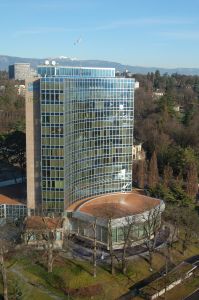
WIPO
WIPO (World Intellectual Monopolies
Organisation), Geneva, Switzerland

VN:F [1.1.7_509]
Rating: 0.0/10 (0 votes cast)
Share and Enjoy: These icons link to social bookmarking sites where readers can share and discover new web pages.
  • Digg
  • del.icio.us
  • StumbleUpon
  • Reddit
  • co.mments
  • DZone
  • email
  • Google Bookmarks
  • LinkedIn
  • NewsVine
  • Print
  • Propeller
  • Slashdot
  • Technorati
  • TwitThis
  • Webnews
  • YahooMyWeb

If you liked this post, consider subscribing to the RSS feed or join us now at the IRC channel. To use your own IRC client, join channel #boycottnovell in FreeNode.

Pages that cross-reference this one

Listed from October 23rd 2007 onwards, pingbacks and trackbacks (external) are omitted

2 Comments

  1. Jose_X said,

    November 5, 2008 at 9:58 pm

    Gravatar

    Some patent machine madness and a possible way forward:

    I was going to mention earlier that if general purpose computers with attached peripherals end up being ruled as legit machines depending on the patent, then would it be acceptable to put the thing together on your own if you own the various components already using them for legal uses? Note that the software itself would not be patentable. [See example here http://boycottnovell.com/2008/10/30/bilski-decision/#comment-32129 ]

    One argument is that it would be illegal, ie, the combination would be a patent violation, but then that would seem to mock the idea of a patent since a patent would be granting a monopoly to something whose components would be fairly well understood/unprotected “inventions”.

    One ruling recently said you couldn’t put together two obvious items in combination and get something patentable, but what about 3 or 4? If 1 and 1 obvious leads to obvious, then 1 and 1 and 1 is obvious by induction. Ie, 1 and 1 was shown to be obvious, so now that same 1 and 1 together with another obvious 1 would also be obvious, at least it would once the first two were put together.

    This argument might point to how courts might ultimately rule. A combination of 3 obvious items might be non-obvious if no one could find an intermediate obvious use for 2 of these or if such use would have the addition of the 3rd item be non-obvious.

    The value here is that perhaps existing patents can be shown to be “obvious” if we can break down the invention components into a series of steps, all such steps shown to be obvious constructions from the 2 component parts. This would apply to all patents.

    Patent laws are horrible. They kill growth and cleverness in people for the sake of giving the first person to put that combo together (and file for a patent) a monopoly for 17+ years. Imagine if every person coming up with a mathematical theorem patented it so that no one could leverage that theorem in their own future proofs for 17 years. That would kill mathematics and science and much more as we know it. But why not allow it for mathematical algorithms yet then allow “inventors” to gain that huge anit-social power grant when they make some aspect of the invention physical/machine? Why kill technological advancements? Frequently, it’s actually the abstract ideas/algorithms the ones that require the greatest craftiness. So we don’t allow patenting of the truly difficult for the sake of social advancement in math etc, yet we then allow the patenting of the frequently more obvious physical device inventions [though maybe this won't be allowed in the future if we can show a clear "proof" to the courts as indicated in the earlier paragraphs above].

    Presumably a just reason for granting patent monopolies would be that further advancement along those lines would not be likely in the short term (17 years) and we would want to help subsidize the investments that led to such a discovery/invention. I think this would make some sense for some of the inventions that have been patented over the years. But then this fails horribly for sw patents for the most part (if not in all cases) because the sw industry has shown that basic inventions and inventions supported by past inventions happen frequently — lead to better products for end users frequently. Meanwhile, FOSS has shown these inventions have real value to users/society and to businesses (eg, Red Hat) at *nominal costs* to those contributing to the development.

    A basis for granting any patents should be that it could not be used to restrict products if those products could be shown to be derivable and mass produced at a low investment by those (eg, inventors) taking part. For example, if they came up with the invention pretty much on their own (and can show clear progression of evolution of ideas) and at an affordable cost and could then get it into the hands of users also affordably.

    I think future arguments before the courts (and before Congress, if laws need to be adjusted) should focus on the unaffordability condition and on the lack of a clear recipe understandable by many practitioners as two prerequisites for granting a patent and for validating a granted patent. Perhaps, based on the recipe and cost functions, if a threshold was met and the patent was granted/upheld, a suitable monopoly period and potential royalty conditions would be determined by the PTO/courts ..or perhaps these limits and allowance would only be determined by the courts (not the PTO), once a challenge was filed, in order to help relive the PTO of such burden for each patent granted.

    VA:F [1.1.7_509]
    Rating: 0.0/5 (0 votes cast)
  2. Jose_X said,

    November 5, 2008 at 10:37 pm

    Gravatar

    I added a bit more explanation within a comment titled “Affordability or having been broken into clear recipes should trump patent rights” here http://www.groklaw.net/article.php?story=20081105132651542#comments

    VA:F [1.1.7_509]
    Rating: 0.0/5 (0 votes cast)

What Else is New


  1. IRC: #boycottnovell @ FreeNode: July 1st, 2009

    IRC Log for July 1st, 2009


  2. Report: Microsoft's Patent Racketeering Comes from Myhrvold

    Microsoft extorts $120 Million out of rival Intuit, using the patent troll it is grooming


  3. Poll: 62% Don't Trust Microsoft on Mono

    A lot of news about Mono with special emphasis on key developments


  4. Proprietary Software Falters

    Microsoft demonstrates that non-Free software is simply incapable of handling mission-critical tasks like GNU/Linux does (in Wall Street for example)


  5. Web Browser Links

    Mostly links about IE8


  6. Confirmed: Windows Vista Still Rejected by Customers

    Beyond the hype there is a rather colossal failure that the press actually reports on


  7. Links 01/07/2009: New Sabayon, New IBM Compiler, Virtualbox 3.0

    Links for the day


  8. Government of Portugal Ignores Procurement Rules and Gives Taxpayers' Money to Microsoft

    Another classic case of illegitimate use of money without public tender


  9. MSCOSCONF 'Winner' is a Marketing Guy, Attacks FOSS

    Microsoft is giving awards to marketing people who help its fight against GNU/Linux (and Free software in general)


  10. Rob Weir Complains About Microsoft's Manipulation of Wikipedia

    Microsoft carries on smearing ODF in public while pretending to support it


  11. Who Promotes Mono? Microsoft and Novell

    New signs lead back to Microsoft (not just Novell)


  12. Microsoft Kills Channel 8 and Channel 10

    Axing embellished as "folding", more on "perception management"


  13. Microsoft-dominated DHS Concerned About Windows Zombies (Corrected)

    Janet Napolitano from Microsoft speaks on behalf of the DHS about the effect of Windows zombies


  14. IRC: #boycottnovell @ FreeNode: June 30th, 2009

    IRC Log for June 30th, 2009


  15. More People Say “No” to Mono, Including the Software Freedom Law Center (SFLC)

    More opposition to Mono surfaces, detailed explanations offered


  16. Another Microsoft Vice President Jumps Ship, Employee Benefits Take a Dive

    At this pace of abandonment, who will be left to lead?


  17. Another Microsoft Product Dies: MSN Web Messenger

    Microsoft hangs the Messenger


  18. Microsoft Exploits Death to Advertise Its Products

    Microsoft uses Michael Jackson's tragic death to advertise itself


  19. Links 30/06/2009: KDE 4.3 Video, SourceForge Hits 4 Billion Downloads

    Links for the day


  20. In Praise of Mozilla Firefox 3.5


  21. Computer Shops Participate in Vista 7 “Scam”

    Microsoft claims a "discount" which is not


  22. Microsoft's Dublin DC Could be Indicative of the Notorious Tax Evasion Conspiracy

    Ireland receives another favour for offering a tax haven to Microsoft?


  23. Microsoft's Latest Benchmark Fraud

    Microsoft's advertising is still a scam and should be dealt with appropriately


  24. Microsoft to Cut Another 2,000+ Jobs

    Microsoft carries on shrinking while it's borrowing money


  25. IRC: #boycottnovell @ FreeNode: June 29th, 2009

    IRC Log for June 29th, 2009


  26. New Examples of Questionable Press Coverage

    Assorted brow-raising items in the news


  27. Mono Proponents Do Not Address the Real Questions

    Supporters of Mono answer questions that are not even asked -- a pattern which requires simple clarification


  28. Microsoft's ODF Lunch Paid Off

    ODF news which is more or less organised and some other picks from the news


  29. Links 29/06/2009: Core Linux 2.1 Released; FreeDOS is Now 15

    Links for the day


  30. GNOME's Evolution Proceeds as Planned?

    The prophecy of Novell's Miguel de Icaza is becoming true


An invade, divide, and conquer Grand Plan

Novell CEO Ron HovsepianHighlight: Novell was the first to acknowledge that Microsoft FUD tactics had substance. Novell then used anti-Linux FUD to market itself. Learn more

Xandros founderHighlight: Xandros let Microsoft make patent claims and brag about (paid-for) OOXML support. Learn more

Linspire CEO Kevin CarmonyHighlight: Linspire's CEO not only fell into Microsoft arms, but he also assisted the company's attack on GNU/Linux. Learn more

Hand with moneyHighlight: Microsoft craves pseudo (proprietary) standards and gets its way using proxies and influence which it buys. Learn more

Eric RaymondHighlight: The invasion into the open source world is intended to leave Linux companies neglected, due to financial incentives from Microsoft. Learn more

XenSource CEOAnalysis: Xen, an open source hypervisor, possibly fell victim to Microsoft's aggressive (and stealthy) acquisition-by-proxy strategy. Learn more

More analysis >>

Recent Posts